
- 15.11.2017
- Розділ Інформаційні статті
- 10516
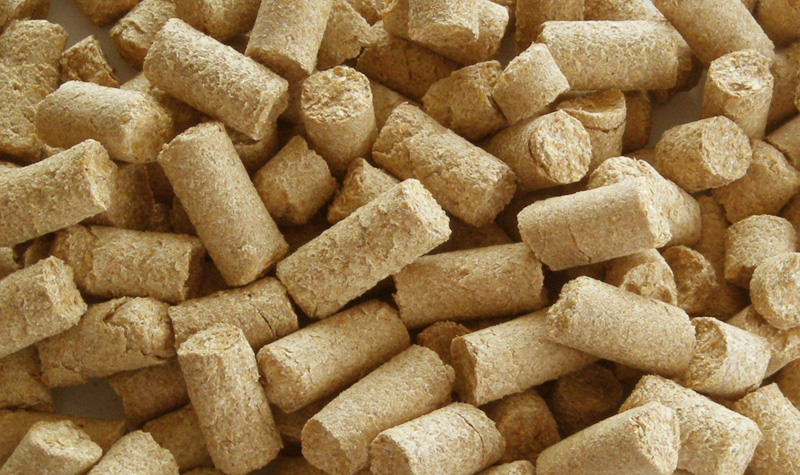
To increase the production of livestock products, a reliable fodder base is necessary. Grain fodder that contains insufficient amounts of proteins, vitamins and other biogenic elements cannot satisfy the rations of animals and birds. In Ukraine, as well as in the world, there is a large deficit of fodder protein. One of the ways to increase the completeness of animal and bird rations is to add to their composition fodder yeast, which is obtained at hydrolysis and cellulose enterprises. Carbohydrates contained in hydrolyzates and sulfite alkalis are used for their cultivation.
Yeast obtained in this way is biologically complete feed, a source of protein, vitamins and minerals. Such yeast contains: protein 48-52%, carbohydrates 13-16%, fats 2-3%, non-nitrogen extractive substances 22-40%, ash 6-10%.
By adding fodder yeast to the rations of farm animals, we thereby increase the biological value of proteins. The microbial protein of fodder yeast is rich in essential amino acids. In terms of amino acid content, fodder yeast is close to proteins of animal origin. They also contain B vitamins and are superior to all protein foods in this regard. Group B vitamins are closely related to protein metabolism in the animal body and are components of enzyme systems, active catalysts necessary for the assimilation of amino acids and protein synthesis.понентами ферментних систем, активними каталізаторами, необхідними для засвоєння амінокислот і синтезу білку.
Fodder yeast is a rich source of vitamin D2, its ash contains valuable macro- and microelements: P, K, Ca, Fe, Mg, S, Cu, Co and others. In terms of total nutritional value, 1 kg of yeast contains from 1.03 to 1.16 feed units and especially a lot of digestible protein – up to 380 – 480 g.
As a valuable high-protein product, fodder yeast must meet the requirements of regulatory documents and standards that regulate the presence, absence or limitation of the content of certain substances. Table 1 shows the requirements, according to GOST 20083-74 “Forage hydrolyzed yeast”, for the quality indicators of this feed.
Table 1. Qualitative indicators of fodder yeast
| Mass fraction of crude protein (in terms of absolute dry matter) | at least 46% |
| Mass fraction of crude protein (in terms of absolute dry matter) | at least 41% |
| Mass fraction of ash (in terms of absolutely dry matter) | no more than 10% |
| Mass fraction of moisture | no more than 10% |
| Metallomagnetic impurities (particles up to 2 mm in size in 1 kg of yeast) | no more than 20 mg |
| Non-protein nitrogenous substances | absent |
| Living cells of the producer | absent |
| Toxicity | absent |
| Total bacterial insemination (thousand cells in 1 g of yeast) | no more than 150 |
GOST 20083-74 “Hydrolyzed feed yeast” regulates that the introduction of urea and other non-protein nitrogenous substances after fermentation is not allowed.
However, in the market of feed and feed additives, this product is subject to total falsification, and when it reaches the consumer through a network of intermediaries, it no longer carries the declared feed value for animals.
It is very difficult to track at what stage the product was falsified, but it is possible to do this by examining feed samples in an analytical laboratory.
For ethical reasons, we do not list the names of manufacturers and companies that sell fodder yeast. But from the consumer’s point of view, having monitored fodder yeast for a certain period, which were sold on the market of Ukraine, we would like to draw your attention to the compliance of some indicators of the chemical composition with the requirements of GOST..
The sample included more than 50 analyzed samples of fodder yeast from different manufacturers and intermediaries and was divided into seven groups. The main indicators by which the analysis was carried out were: the content of dry matter, crude protein and non-protein nitrogen, Fig. 1.
Fig. 1 Comparative assessment of the quality of fodder yeast with the requirements of GOST
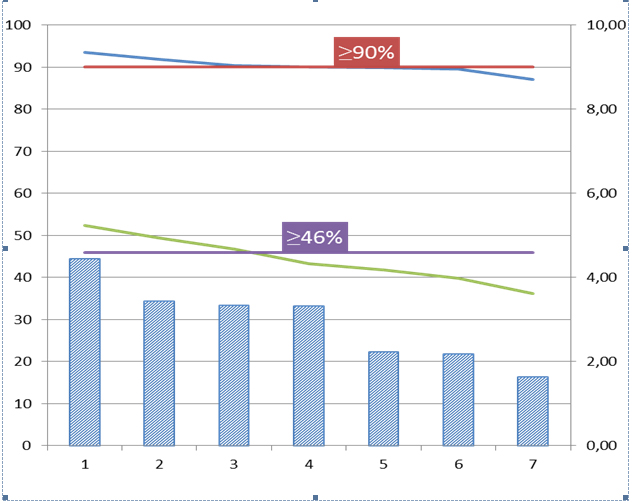
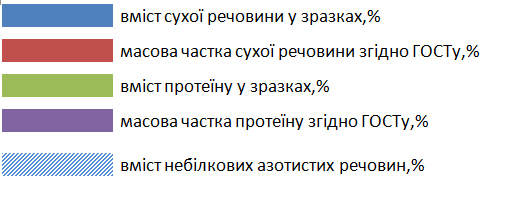
The results of the conducted monitoring showed that almost 43% of the samples had an excess moisture content, more than 57% of the samples had a level of crude protein, in terms of dry matter, less than 43%. It turned out to be characteristic that, regardless of the crude protein concentration, non-protein nitrogen was present in all feed yeast samples. Its concentration varied from 1.6 to almost 4.5%.
ІOf the analyzed samples, only 43% can be called fodder yeast based on the protein level, and in general, taking into account the fact that all “fodder yeast” samples contained non-protein nitrogen, they do not meet the requirements of GOST and can be falsified by introducing, for example, urea or other non-protein compounds.
Not every average consumer can conduct a feed analysis and, trusting the manufacturer, accepts information from the label, which does not always reflect the actual quality indicators of a particular feed. Therefore, the next solution is to buy fodder from sellers who have proven themselves well on the market, or to look for other alternatives to this fodder without wasting money.
If the problem is to solve the lack of protein in the rations and this can be compensated by introducing high-quality soybean and sunflower meal and meal into them. In the event that the protein issue is partially resolved and there is a need to balance the rations according to other indicators, the amino acid vitamin-mineral feed concentrate “FOOD” comes in handy.


