
- 16.03.2021
- Розділ Інформаційні статті
- 649
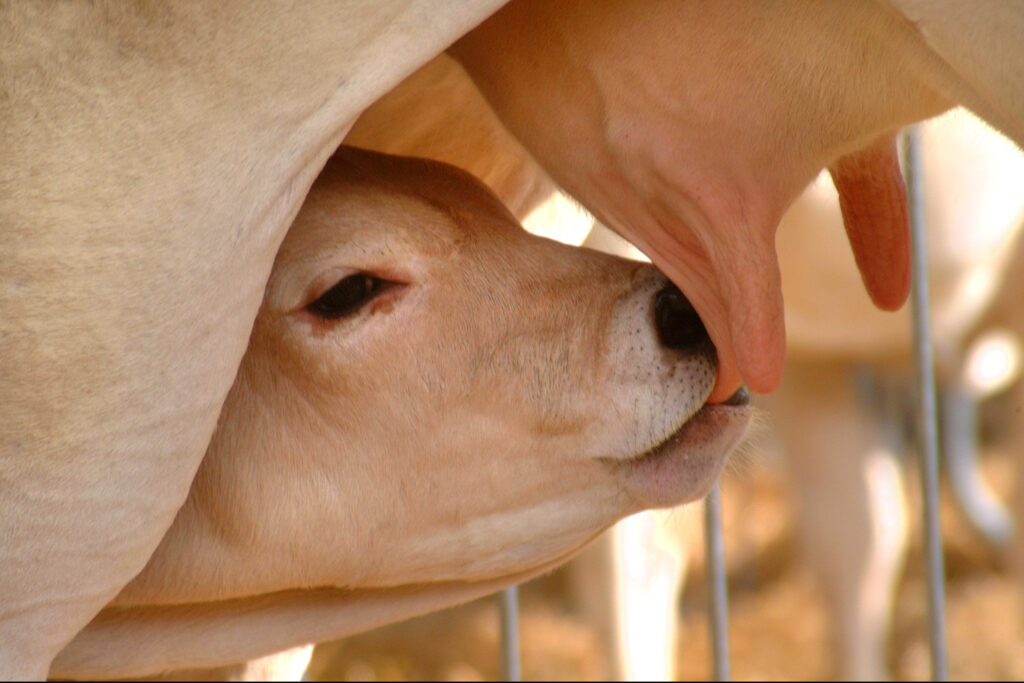
It is an indisputable fact that the productivity of weaned young animals depends on the balance of the feeding rations in terms of the content of the main nutrients. All the necessary substances during the milk period were given to the calves born with the mother’s milk. In order to further ensure intensive growth and full-fledged development, calves should receive the necessary nutrition (protein, mineral, vitamin) in the post-weaning period in their feeders.
Preparation for the transition to self-feeding takes place during the milk period, where calves are gradually accustomed to coarse and concentrated feed. During this period, calves get used to eating high-quality cereal and bean hay, balanced concentrated fodder mixes, which stimulates the development of the foreskin and is a guarantee of future productivity. It is during this period that a properly balanced feed mixture of cereals is a powerful impetus for obtaining healthy and productive young animals.
To balance the diet, supplements are used that differ in terms of administration, composition, brands, etc. The purpose of the production experiment was to determine the effectiveness of the direct effect of the balancing additive ZHYVYNA AAVMFC, introduced into the concentrated fodder of the animal diet, with the aim of maximally using the fodder base of the agricultural enterprise. The basis is the economic and physiological efficiency of its introduction at the same forage balance.
The experiment was carried out on weaned young Holstein cattle on the farm of the average Ukrainian agricultural enterprise SVK VIVSIANYTSKE (Vivsyanyky village, Kozyatynsky district, Vinnytsia region).
The scheme according to which the experiment was carried out is shown in Table 1.
The concentration of the main nutrients in the diet consumed by calves of the control and experimental groups practically did not differ. The diet was deficient in content: protein by 1.9-2.4 times; crude fat by 2.8 times; of sugar in 3.2 times. The level of metabolic energy in the diet was below the norm by 23%, and the content of macronutrients such as calcium and phosphorus did not reach the norm by 77 and 68%, respectively. This explains the low average daily gains of the calves of the control group, which according to the feeding norm should be 850 g, but in reality were at the level of only 294 g.
With regard to the diet of the calves of the experimental group, the balance of vital components was adjusted due to the additive ZHYVYNA AAVMFC, the introduction of which made it possible to increase productivity. Against the background of a general catastrophic deficiency of protein in the diet (Fig. 1), the additive AAVMFC Zhivyna ensured the most effective transformation of its nutrients into products – in this case, into an increase in the live weight of calves.
Based on the conducted research, a number of measures were developed and proposed to increase the economic and physiological efficiency of feeding young cattle, taking into account the available feed resources of the farm and the feasibility of additional acquisition of other components.
O.I. Kylymniuk, PhD 067 4063300
Institute of Fodder and Agriculture of Podillia National Academy of Sciences


