
- 25.10.2017
- Розділ Інформаційні статті
- 3143
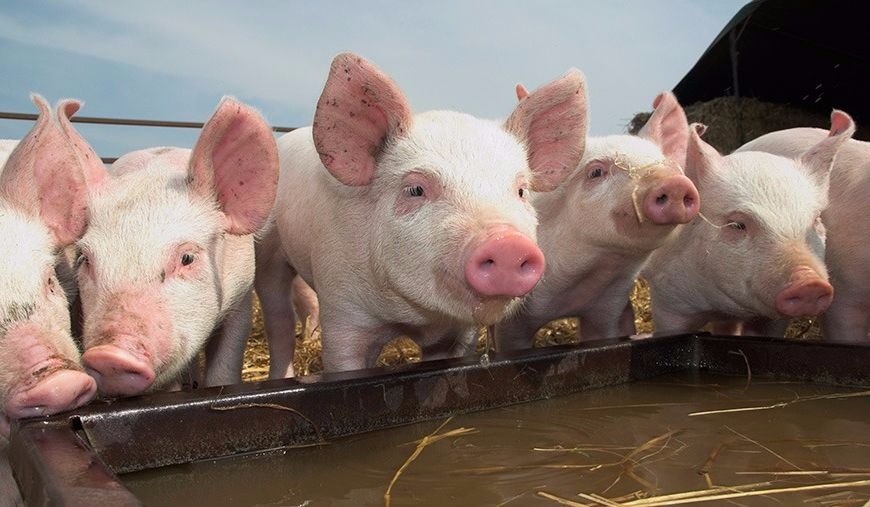
How to feed an animal and get the maximum amount of useful products from it with minimal expenditure of feed and time? Such a question arises for every owner who begins to calculate the cost of fodder, observes the effectiveness of their use in feeding farm animals
Experience is a human possession that comes over the years and is passed from one person to another. Therefore, when the question arises whether you feed your pets correctly and effectively, some of the owners, based on their own experience, answer skeptically: “…You will teach me how to feed…”. Yes, dear pet owners, you also need to know how to feed. In some sense, this is an art and a science, how you do it depends on the final result of your expectations.
To feed a boar with a live weight of 150-180 kg, under normal conditions, the owner spends about two years of time and 8-10 feed units per 1 kg of growth. That is, about 2 tons of grain feed is spent during the fattening period, and the average daily gain does not exceed 300-400 grams. Such feed is unprofitable in growing both for own consumption and unprofitable when growing tubs for sale. With such costs of time, labor, and feed resources, many owners come to the conclusion that it is cheaper to buy a fattened boar than to feed their own. As a specialist in the field of feeding agricultural animals, I do not agree with this, because animal husbandry at home can also be worthy of you. Judge for yourself: the productive potential of pigs is quite high, they can give up to 1500 grams of live weight gain per day. The main components of productive potential:
According to reasonable feeding norms, a pig with a live weight of 60 kg with an average daily gain of 850 g should consume 2.5 kg of dry matter of feed, which contains 435 g of crude protein. It is from it that the body synthesizes 127.5 grams of protein to maintain productive potential. This protein consists of 22 g of lysine and other amino acids (lysine is the main amino acid without which protein cannot be assimilated in the body of animals, birds, or humans). For an example of feeding, let’s take the same amount of wheat chaff (2.9 kg of chaff corresponds to 2.5 kg of dry matter). This amount of feed contains 387 grams of crude protein and 8.5 grams of lysine. When feeding such cattle, the synthesis of protein in the daily gain is significantly limited by the deficiency of lysine, and can amount to only 60 g, and the average daily gain of the animal will not be higher than 350 grams per day. At the same time, it should be noted that out of 387 g of crude wheat bran protein (2.9 kg in natural weight), only 183 grams are used for the synthesis of growth protein. That is, the efficiency of using such a valuable feed component as wheat bran protein is 47%.
The protein of cereal grains (wheat, barley, oats, rye) for animals is unbalanced in terms of amino acid components, therefore, along with cereal grains, for the production of grain mixes, in animal feed, leguminous grains (peas, soybeans, lupins, fodder beans), processing waste are used industrial crops (cake, meal) or feed of animal origin (meat and fish meal). Since the body uses the amino acids included in the protein feed to build its own proteins, in the event of their absence or insufficient amount, the synthesis stops, and the rest of the available amino acids depreciate and are removed from the body naturally. When feeding animals with such feed, animals do not grow well, and feed costs increase. “The result of effective feeding is the weight of the animal, not a pile of manure,” the owners say.
The completeness of protein is one of the main factors that influence growth and decrease feed costs. In addition, the feed fed to animals must contain a sufficient amount of macro- (calcium, phosphorus, magnesium, sodium) and micro-elements (iron, zinc, manganese, copper, cobalt, iodine, selenium). This is the second most important factor of productive potential. Inadequate supply of animal rations with mineral substances directly affects productivity, and leads to diseases and developmental abnormalities.
Another factor that must be taken into account when feeding is sufficient availability of vitamins A, D, E, B, PP (catalysts of metabolic processes in the body). These three factors, which affect the quality and completeness of feeding, are the main indisputable component of the formation of the productive potential of your animals.
The Institute of Feeds of the THE NATIONAL ACADEMY OF AGRARIAN SCIENCES OF UKRAINE together with the Ukrainian enterprise developed and tested a new product that allows to significantly improve the factors of formation of productive potential – ZHYVYNA AAVMFC (amino acid vitamin-mineral feed concentrate). The manufacturer laid the basis of the product on the stimulating and protective effect of substances of natural origin (capsaicin and others). They stimulate the activity of enzymes of the digestive organs, increase the general digestibility of nutrients, reduce heat stress, protect the microvilli of the stomach from the action of toxins and free radicals, and stabilize the microflora of the gastrointestinal tract. It also includes three essential amino acids: lysine, methionine, threonine, which are the most deficient in grain diets and are most necessary for the full growth of animals and poultry. This product is developed on the basis of new developments and techniques in feeding agricultural animals, combines many years of practical experience with the private and public sector. The optimal ratio and dosed introduction according to the recommendations for the use of amino acid vitamin and mineral concentrate in ZHYVYNA allows to increase the productivity of animals and reduce feed costs to 2.5-3 fodder units per 1 kg of growth.
The opinion of specialists in this matter coincides in one thing: effectively!
O.I. Kylymnyuk, Researcher of the Institute of Feeds of the The National Academy of Agrarian Sciences of Ukraine


