
- 01.04.2019
- Розділ Без рубрики
- 2235
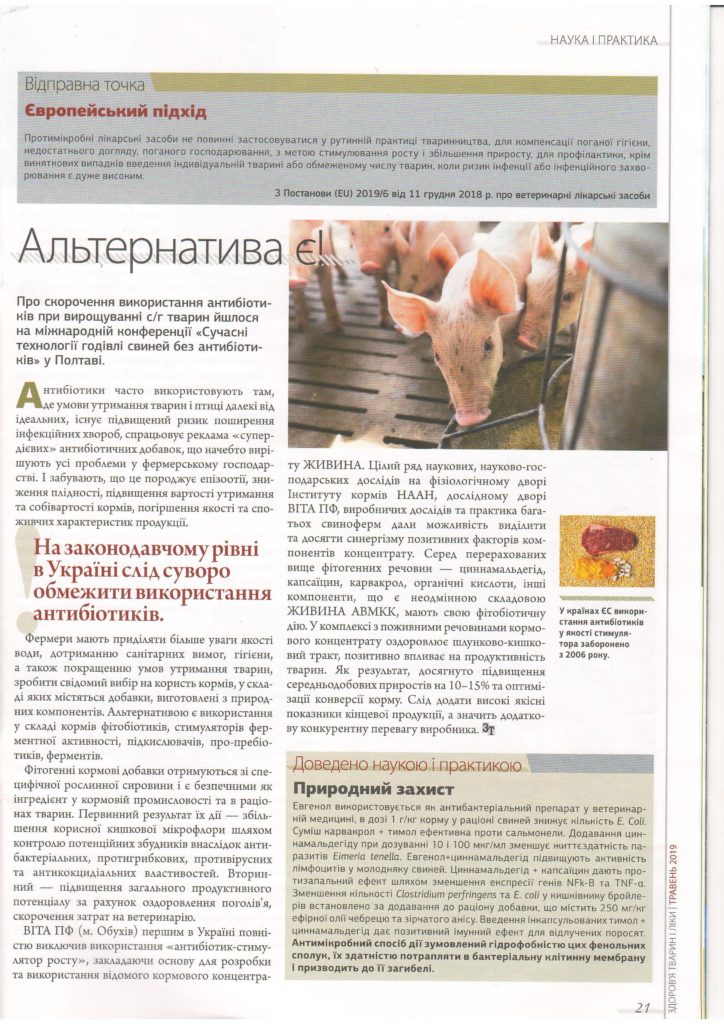
Excessive use of antibiotics in animal husbandry threatens human health around the world, according to the 2018 annual report of the Food and Agriculture Organization of the United Nations (FAO). Due to the misuse of antibiotics, some types of infections are practically untreatable. They are systematically used not only for the treatment of diseases, but also for the prevention and stimulation of growth. The concept of “antibiotic-growth stimulator” has become generally accepted, familiar and increasingly threatening to humanity. In EU countries, the use of antibiotics as a stimulant has been prohibited since 2006. The danger is that antibiotic-resistant bacteria can be transmitted from animals to humans by consuming livestock and poultry products. Researchers say that farmers should significantly reduce their use in livestock and poultry farming.
In November 2015, scientists in China found the mcr-1 gene in bacteria, which makes them virtually immune to the action of all known antibiotics. A similar gene was identified in bacteria in Denmark, which means that it can be assumed that the resistance of bacteria to antibiotics is increasing. Against this background, some types of infections are practically not amenable to treatment even with their increased rates of administration.
Antibiotics are often used where the conditions of keeping animals and birds are far from ideal and there is an increased risk of spreading infectious diseases. Another incentive for their use is the active advertising by sellers of the quick effect of the introduction of “super-effective” antibiotic additives that solve all the problems of farmers, forgetting to indicate that soon this gives rise to epizootics in the general herd, a decrease in fertility, an increase in the cost of maintenance and the cost of feed, deterioration in quality and consumer characteristics livestock and poultry products.
At the legislative level, there should be strict restrictions on the use of antibiotics in Ukraine. Farmers should pay more attention to water quality, compliance with sanitary requirements, hygiene, as well as improving the conditions of keeping animals. They should make a conscious choice in favor of feeds that contain additives made from natural components.
An alternative is the use of phytogenic substances (phytobiotics), enzyme activity stimulators, organic acids (acidifiers), pro-prebiotics, and enzymes in feed.
Phytogenic feed additives are obtained from specific plant raw materials, a relatively young class of feed additives. These products, unlike synthetic antibiotic growth promoters, are safe for use as an ingredient in the feed industry and in animal diets. The extracts include many different biologically active ingredients such as alkaloids, bitters, flavonoids, glycosides, mucilages, saponins, phenolic tannins, polyphenols, terpenoids, polypeptides, thymol, cineol, linalool, anethole, allicin, capsaicin, allyl isothiocyanate and piperine.
The primary effect of such feed additives is to increase beneficial intestinal microflora by controlling potential pathogens, they are well known for their antibacterial, antifungal, antiviral and anticoccidial properties. Secondary – increasing the overall productive potential due to the improvement of the entire population, reducing the costs of humane veterinary medicine.
For example, eugenol is used as an antibфacterial drug in veterinary medicine (Rhayour et al., 2003). Similarly, a mixture of carvacrol + thymol as active compounds was effective against Salmonella (Koscova et al., 2006). In an in vitro study, the addition of cinnamaldehyde at a dosage of 10 and 100 μg/ml reduced the viability of Eimeria tenella parasites compared to the control (Lee et al., 2011). A reduction in E. coli was observed in a study when 1 g/kg eugenol was added to the diet of pigs (Yan and Kim, 2012). A reduction in the number of Clostridium perfringens and E. coli in the intestine of broilers was established when a supplement containing 250 mg/kg of essential oil of thyme and star anise was added to the diet (Cho et al., 2014). In another experiment, Wati et al. (2015) demonstrated that when broilers are infected with Salmonella enteritidis and E. coli when using a diet containing 150 mg/kg of the phytobiotic, reduced numbers of salmonella, E. coli and Clostridium and higher rates of lactobacilli. The antimicrobial mode of action is thought to be due to the hydrophobicity of these phenolic compounds and the fact that these compounds can enter the bacterial cell membrane, leading to cell membrane disruption, ion leakage and ultimately cell death (Burt, 2004).
Supplements to the diet of piglets containing cinnamaldehyde+capsaicin have been shown to have an anti-inflammatory effect by reducing NFkB and TNF alpha gene expression (Kroismayr et al., 2008.) Yang and Kim (2012) noted that eugenol+cinnamaldehyde increased lymphocyte activity in young piglets. pigs The use of thymol + cinnaldehyde reduces the concentration of inflammatory mediators, the concentration of interleukin in plasma, which indicates the positive effect of phytobiotic feed additives on animal health. Administration of encapsulated thymol+cinnamaldehyde has been reported to have positive immune effects, such as increased lymphocyte proliferation, phagocyte activity, and increased immunoglobulins such as IgA and IgM in the blood of pigs at weaning (Li et al., 2012b) .
On March 14, 2019, the issue of reducing the use of antibiotics in raising farm animals was raised at the international conference “Modern technologies of pig feeding without antibiotics” in Poltava.
During the discussion of the topic, a researcher of the Institute of Fodder of the National Academy of Sciences emphasized that the scientific work of the laboratory of zootechnical evaluation of fodder and the Ukrainian producer VITA PF (fodder plant in Obukhiv) on this topic was effectively investigated since 2005.
VITA PF (Obuhiv) is the first in Ukraine to completely eliminate the use of “antibiotic-growth stimulator”, laying the foundation for the development and use of the well-known feed concentrate ZHYVINA.
A whole series of scientific, scientific and economic experiments at the physiological yard of the Institute of Feeds of the National Academy of Sciences, the experimental yard of VITA PF, production experiments and the practice of many pig farms made it possible to identify and achieve synergism of the positive factors of the concentrate components. Among the phytogenic substances listed above – cinnamaldehyde, capsaicin, corvaclol, organic acids, other components, which are an essential component of AVMKK FEED, have their phytobiotic effect, which, in combination with the nutrients of the fodder concentrate, improves the gastrointestinal tract and generally affects the productivity of animals.
As a result: in practice, an increase in average daily gains by 10-15% and optimization of feed conversion was achieved. It should be added high quality indicators of final products, which means an additional competitive advantage of the manufacturer.
Recently, companies positioning themselves as producers of safe natural products have entered the Ukrainian market. But, just yesterday, under other brands, they were selling growth stimulants, antibiotic growth stimulants, artificial flavorings, sweeteners, and other products that, to put it mildly, were far from natural.
Time is running out. Some supplements are replaced by others. Some brands disappear altogether.
Only those that have a strong basis, which are natural raw materials, high-quality feed components that carry a preventive component and high availability for the body of animals and poultry, work stably.


